Blog
How to Maximize Energy Efficiency with Your Commercial HVAC System


Energy costs represent a significant portion of operating expenses for commercial properties, with HVAC systems accounting for 40-60% of total energy consumption in most buildings. A well-maintained, properly configured HVAC system can reduce energy use by up to 30%, delivering substantial savings over time.
Key Strategies for Energy Efficiency
Regular filter replacement, proper thermostat programming, and scheduled maintenance form the foundation of an energy-efficient HVAC operation. Beyond these basics, several additional strategies can yield significant savings:
Upgrading to high-efficiency equipment with higher SEER ratings, installing programmable or smart thermostats with occupancy sensing, implementing demand-controlled ventilation in spaces with variable occupancy, sealing and insulating ductwork to prevent conditioned air loss, and using variable-speed drives on fans and compressors to match output to actual demand.
Smart Controls and Automation
Modern smart thermostats and building management systems allow for precise temperature control across zones, ensuring comfort while minimizing waste. These systems can learn occupancy patterns, adjust setpoints based on outdoor conditions, and provide detailed energy consumption data for analysis.
At Midwood Kings, we help businesses select and install the right equipment and controls for their specific needs. Our team evaluates your current systems and identifies the highest-impact improvements. Browse our smart thermostats.
The ROI of Preventive Maintenance
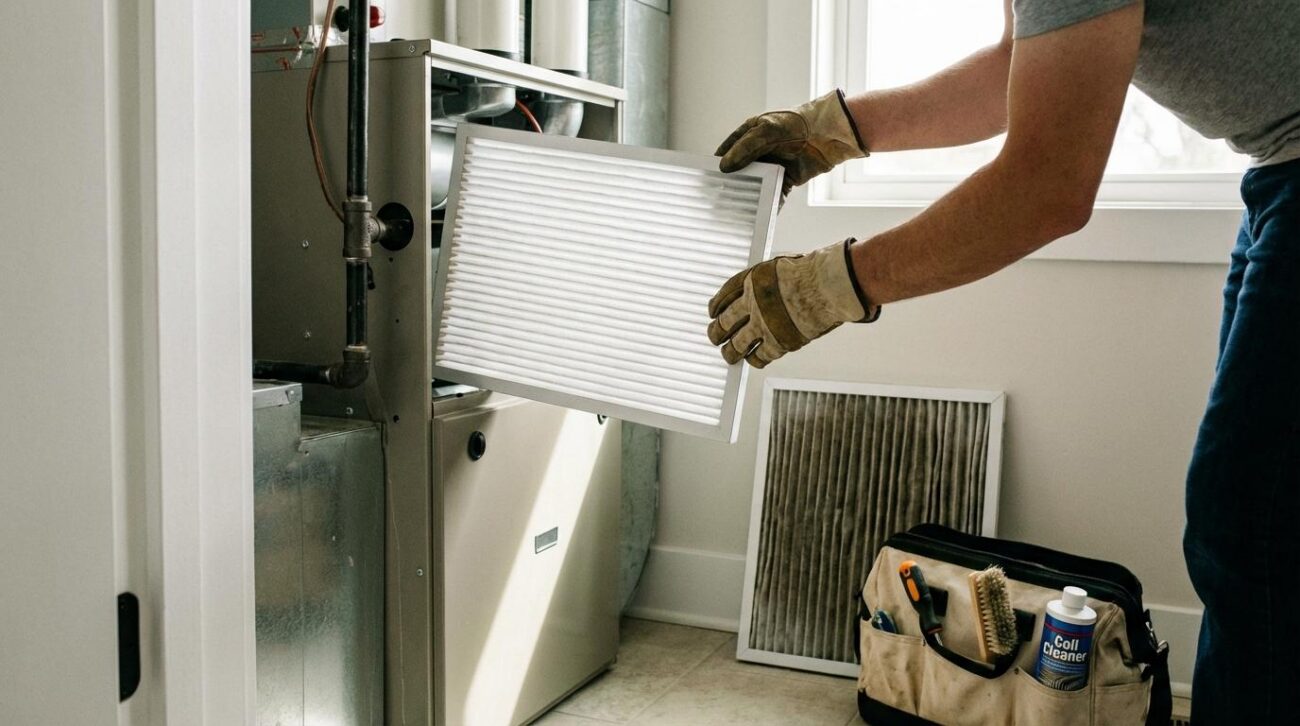
Investing in a maintenance contract typically pays for itself within the first year through reduced energy bills and fewer emergency repairs. Dirty coils alone can increase energy consumption by 20%, while low refrigerant charges reduce both capacity and efficiency. Our service contracts include regular inspections, filter changes, coil cleaning, and system optimization to keep your equipment running at peak performance. Learn about our maintenance plans.